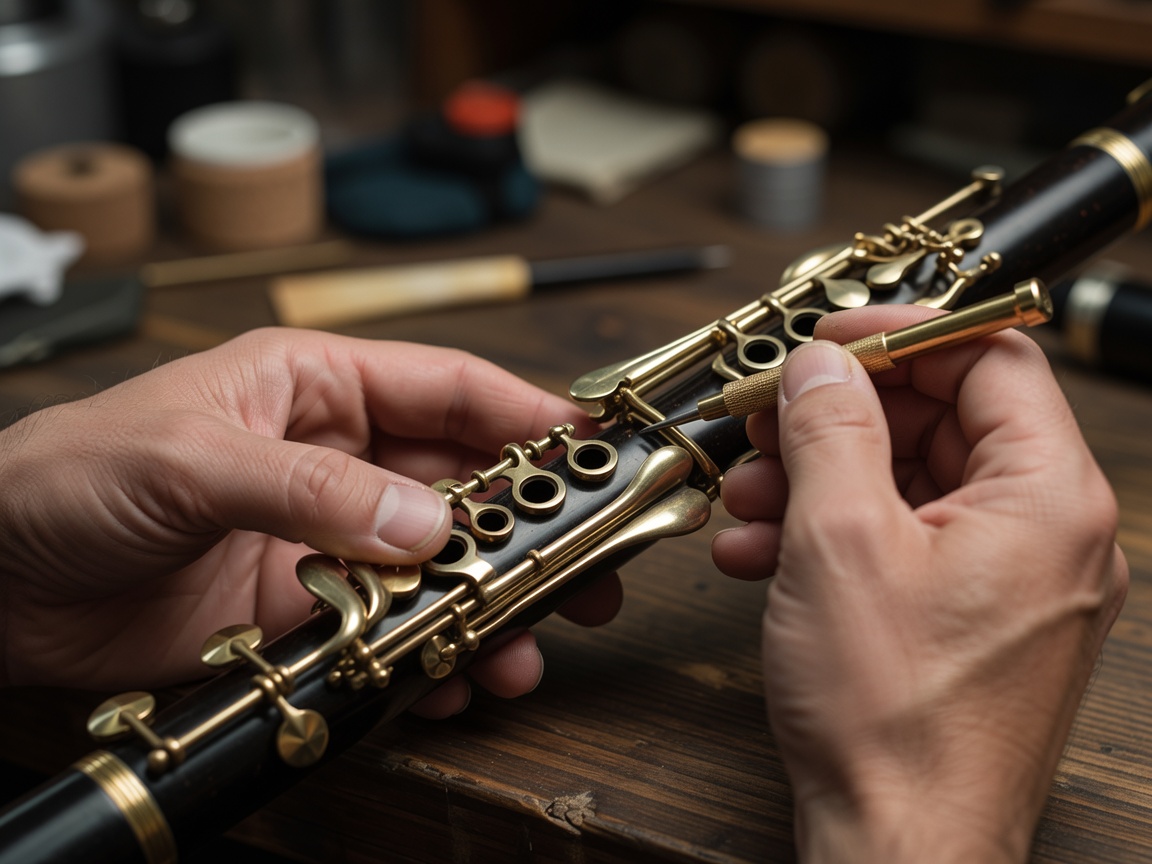
Setup is not one universal recipe
The word “setup” can describe a range of practical adjustments that help an instrument function for a particular player. The relevant details differ between instrument families. On a violin or guitar, setup may involve strings, bridges, action or other fitted parts. A woodwind instrument may involve pads, key heights, spring response, corks and sealing. Brass instruments have their own valves, slides, mouthpiece relationships and mechanical checks. Percussion instruments introduce different questions of tension, contact and maintenance. These examples are not interchangeable, and they do not make every adjustment suitable for a beginner.
Start by naming the instrument and the question being addressed. Is the concern comfort, response, a mechanical fault, tuning stability or a change in tone? A maker or repairer may need to inspect the instrument before identifying a cause. A description alone may not be enough to diagnose it. In a workshop, the aim may be to show how a specialist thinks, not to provide a remote fix for a participant’s instrument.
Listen with a question in mind
Listening becomes more useful when the comparison is clear. A player might describe an instrument as slow to respond, uneven across registers, uncomfortable or unstable. Those words are clues, not diagnoses. The maker can ask the player to demonstrate, note what conditions are consistent, and inspect the relevant parts. Changes should be evaluated in context: the player, room, instrument condition, playing technique and musical task can all influence what is noticed.
During a demonstration, ask what the maker is listening for and what remains unchanged during the comparison. If multiple variables shift at once, it can be difficult to know which change mattered. Some makers use measurements and reference checks alongside playing tests. Others explain that an audible difference is subjective or can depend on the player’s response. A responsible account does not promise that one adjustment will produce a universal improvement.
The loop: inspect, adjust, listen
A basic way to follow setup work is to notice the loop rather than memorise a recipe. First, the maker clarifies the player’s concern and inspects the instrument. Next, they identify a likely factor and decide whether a change is appropriate. Then they make a controlled adjustment using tools and methods suitable for that instrument. Finally, they compare the result and gather feedback. They may keep the change, refine it, or restore the prior state.
- Ask: What does the player notice, and in which situation?
- Inspect: What condition or mechanical detail needs checking?
- Choose: Which variable is reasonable to alter, if any?
- Compare: What did the player hear or feel after the change?
- Decide: Keep, refine or reverse the adjustment based on evidence.
This sequence supports understanding, not self-treatment of a valuable instrument. In a supervised session, participants may compare prepared examples, inspect a non-critical practice mechanism or learn vocabulary for describing a concern. A specialist may reserve certain work for trained hands because a small error can damage a part, create a safety issue or make the instrument less playable.
Voicing and the limits of simple claims
Voicing can refer to skilled work that shapes how an instrument responds or speaks, particularly in contexts where a maker adjusts components with sound and feel in mind. The meaning varies across instrument traditions. It should not be treated as a magic final step that transforms any instrument into an ideal one. A maker’s objective may be a particular balance or response, but the player’s preferences and the instrument’s construction set limits. The way sound is perceived also depends on the listener’s position, room acoustics and playing approach.
Ask a specialist what they mean by “voicing” in the session and which instrument family they are discussing. If the term covers a specific operation, request an explanation of what is being altered and how the maker evaluates it. Separating general craft language from a precise technical description helps beginners avoid false equivalences. A good instructor will be comfortable saying when a term is broad or when one maker’s use differs from another’s.
Player feedback is part of the work
The player is not merely a final test. Their experience helps define the problem and evaluate whether a change suits the intended music. A useful conversation includes concrete examples: when does the issue happen, which register or technique is involved, and has anything changed recently? The maker may ask the player to repeat a short phrase or test a familiar passage. The outcome is collaborative, but technical responsibility still belongs to the qualified professional who makes the adjustment.
For workshop visitors, this is a good opportunity to see how communication affects craft. Notice whether the maker asks open questions, explains uncertainty and checks the player’s comfort. If you attend as a musician, bring a clear description of your aims and ask whether your instrument can be assessed during the session. Do not assume a general class includes individual repair or a full setup service.
What beginners can realistically learn
A short introduction can help you recognise the vocabulary of setup, see why a maker tests an instrument repeatedly, and understand when to seek professional help. You may practise describing an issue without claiming to diagnose it. You may learn to compare a prepared demonstration sample, or observe a specialist use a gauge or fitting tool. Whether you can handle tools depends on the instructor, the activity and the condition of the instrument. Ask before bringing a valuable or fragile instrument into a hands-on class.
Respect safe handling guidance, especially around sharp tools, springs, chemicals, heated equipment or tensioned components. Follow the instructor’s limits and do not copy an adjustment later without appropriate training. If a session offers supervised practice, ask which actions are included and what the instructor will inspect. If it is a demonstration, bring questions and take notes. Both formats can clarify how hands-on decisions connect to sound and playability.
Terms for careful listening
- Response
- How an instrument reacts to a player’s input; the meaning depends on instrument and context.
- Setup
- Adjustment and inspection of relevant parts to support function and playability.
- Voicing
- A specialist term whose exact meaning varies by instrument family and maker.
- Baseline
- A reference condition or comparison used to understand a change.
Choose a suitable workshop format, or draft an enquiry through Contact.